Thymalin/Thymulin
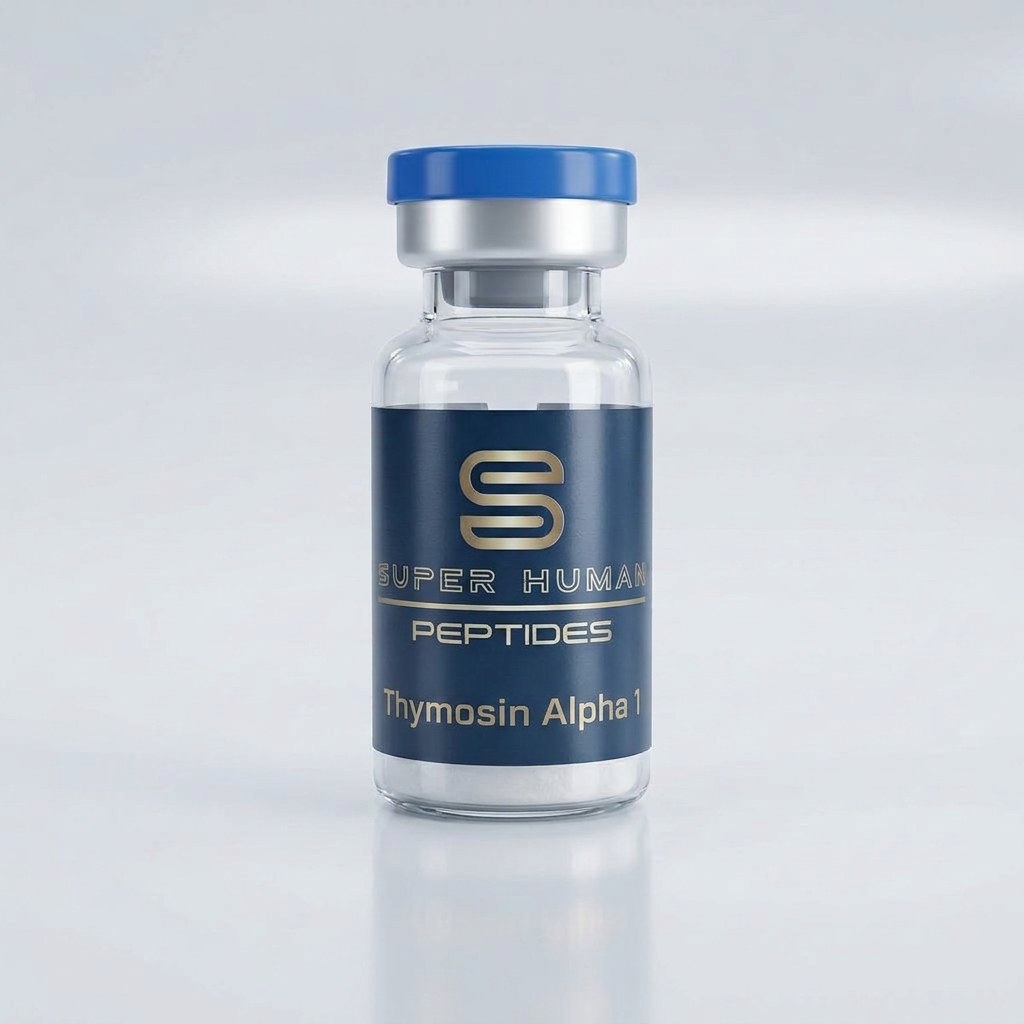
Thymalin and Thymulin from Super Human Peptides UK represent a highly specialized class of synthetic thymic bioregulators. Thymulin is a precisely sequenced nonapeptide (9 amino acids) originally isolated from the thymus gland, while Thymalin refers to a closely related complex of thymic peptides utilized to modulate identical immune pathways. In laboratory research, these peptides are the premier models for investigating the maturation and differentiation of T-cells.
Thymulin is particularly unique in neuroimmunology because it is a metallopeptide—it strictly requires the binding of a zinc ion to achieve its biologically active state. Researchers utilize this peptide to study the reversal of immune senescence (the aging of the immune system), the restoration of CD4/CD8 T-cell ratios, and the complex cross-talk between the neuroendocrine and immune systems. Produced under GMP-compliant conditions and verified for 99% purity or higher, this thymic bioregulator is an essential tool for advanced immunology and gerontology research.
- —Thymic Bioregulator: Models the endogenous endocrine function of the thymus gland.
- —T-Cell Maturation: Stimulates the differentiation of immature thymocytes into active T-lymphocytes.
- —Zinc-Dependent Activity: Thymulin relies on a zinc ion co-factor to achieve its active receptor-binding conformation.
- —High Purity: 99% purity or higher (verified by HPLC and MS analysis).
- —Quality Standard: GMP / ISO certified manufacturing.
- —Documentation: Full Certificate of Analysis (COA) included with every batch.
- —T-Cell Differentiation: Studying the induction of T-cell markers on immature lymphoid cells.
- —Immune Senescence: Preclinical models exploring the restoration of immune competence in aged subjects following natural thymic involution.
- —Zinc-Peptide Interactions: Investigating the metallobiology of the zinc-Thymulin complex and how zinc deficiency mimics thymic dysfunction.
- —Neuroendocrine-Immune Axis: Researching how thymic peptides influence the hypothalamus and pituitary gland to regulate systemic stress responses.
- —Viral and Pathogen Defense: Evaluating the enhancement of natural killer (NK) cell activity and T-cell cytotoxicity in immunocompromised models.
The discovery of Thymulin by researcher Jean-François Bach and the extensive bioregulator research by Vladimir Khavinson (Thymalin) laid the foundation for modern thymic peptide therapy. Laboratory studies demonstrated that the thymus is not just a lymphatic organ, but a highly active endocrine gland that produces peptides to orchestrate the entire adaptive immune system. Research has shown that thymic peptide levels plummet as subjects age (a process called thymic involution), directly correlating with a weakened immune defense.
In animal models, particularly those that have been thymectomized (thymus removed) or are naturally aged, the administration of Thymulin/Thymalin has been shown to rapidly restore T-cell populations, improve CD4/CD8 ratios, and drastically enhance the subjects' ability to mount a defense against induced viral or bacterial challenges. Furthermore, studies on Thymulin consistently highlight that zinc supplementation synergistically amplifies its biological efficacy.
- 1.Bach, J.F. et al., "The thymus-specific immunity, the role of thymulin," Journal of Autoimmunity, 2000.
- 2.Khavinson, V.H. et al., "Peptide bioregulators: A new class of geroprotectors," Annals of the New York Academy of Sciences, 2002.
- 3.Dardenne, M. et al., "Zinc and receptor-binding motifs of thymulin," Proceedings of the National Academy of Sciences, 1982.
- 4.Safieh-Garabedian, B. et al., "Thymulin and its role in the immunomodulation of inflammation and pain," International Journal of Immunopharmacology, 1992.