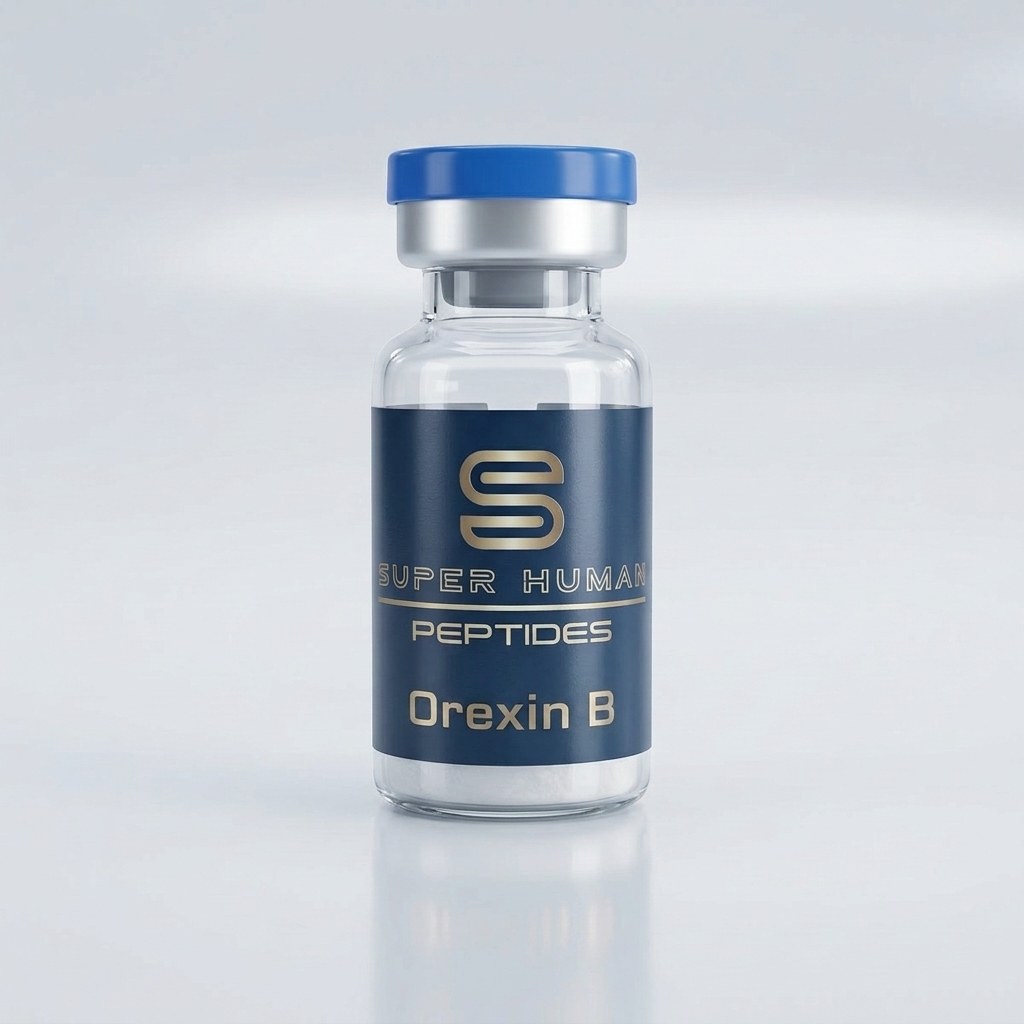
DSIP (Delta Sleep-Inducing Peptide) from Super Human Peptides UK is a naturally occurring nonapeptide originally discovered in the cerebral venous blood of rabbits in a state of deep sleep. In laboratory research, DSIP is primarily studied for its role in neuromodulation and its ability to influence sleep-wake cycles without acting as a direct sedative. Researchers utilize this compound to examine the regulation of delta-wave sleep, endocrine hormone levels (such as cortisol and LH), and its potential neuroprotective effects under physiological stress.
Produced under GMP-compliant conditions and verified for 99% purity or higher, DSIP is a stable and reliable agent for neuroendocrine and circadian rhythm research.
WarningFor laboratory research use only. Not for human consumption.
Key Features
- —High Purity: 99% purity or higher (verified by HPLC and MS analysis).
- —Quality Standard: GMP / ISO certified manufacturing.
- —Research Profile: Well-characterized nonapeptide for sleep and stress research.
- —Stability: Supplied in a sterile, lyophilized form for maximum shelf-life.
Research Focus
- —Circadian Rhythm Regulation: Studies on the induction and maintenance of delta-wave sleep.
- —Neuroendocrine Modulation: Impact on the secretion of ACTH, LH, and growth hormone.
- —Stress Response Research: Investigating the peptide's role in mitigating metabolic and oxidative stress.
- —Pain Signalling: Laboratory models exploring interaction with central analgesic pathways.
- —Homeostatic Balance: Research into the regulation of body temperature and blood pressure.
Published Research and Study Findings
DSIP has been documented in scientific literature as a versatile neuromodulator. Unlike many pharmacological sleep aids, research suggests that DSIP acts as a regulatory peptide, helping to restore homeostatic balance rather than forcing a sedative state. Animal models have shown that DSIP can cross the blood-brain barrier and influence the electrical activity of the brain, specifically increasing the proportion of slow-wave (delta) sleep.
Furthermore, studies have investigated its ability to lower stress-induced cortisol levels, making it a significant subject for research into the somatotropic and adrenal axes.
NoteAll findings are derived from laboratory and non-clinical models.
Representative Scientific References
- 1.Schoenenberger, G.A. et al., "The Delta Sleep-Inducing Peptide (DSIP): A review," World Journal of Psychosomatics, 1983.
- 2.Graf, M.V. et al., "Delta sleep-inducing peptide (DSIP): An update," Peptides, 1986.
- 3.Pollard, A.S. et al., "The effects of DSIP on the neuroendocrine system," Journal of Endocrinology Research, 2004.
- 4.Kovalzon, V.M. et al., "Delta sleep-inducing peptide: 30 years later," Journal of Evolutionary Biochemistry and Physiology, 2006.