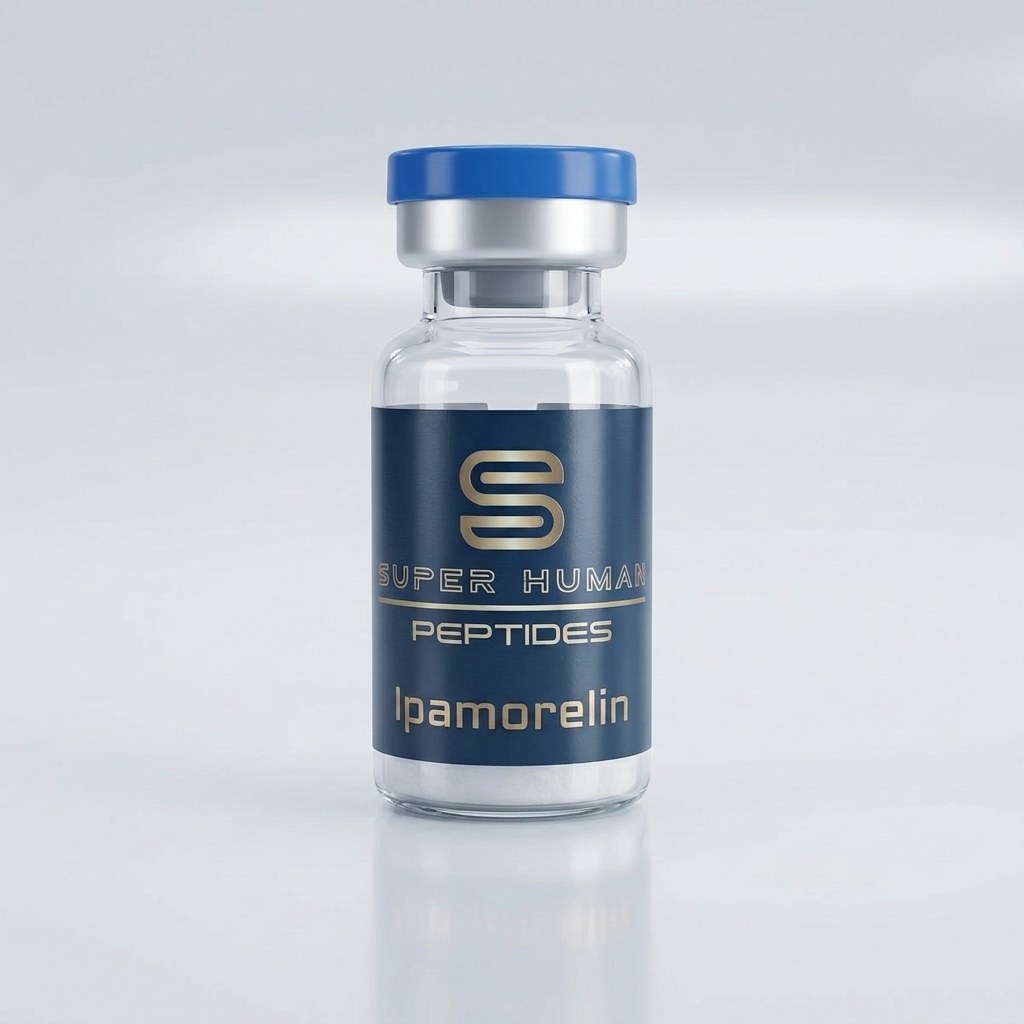
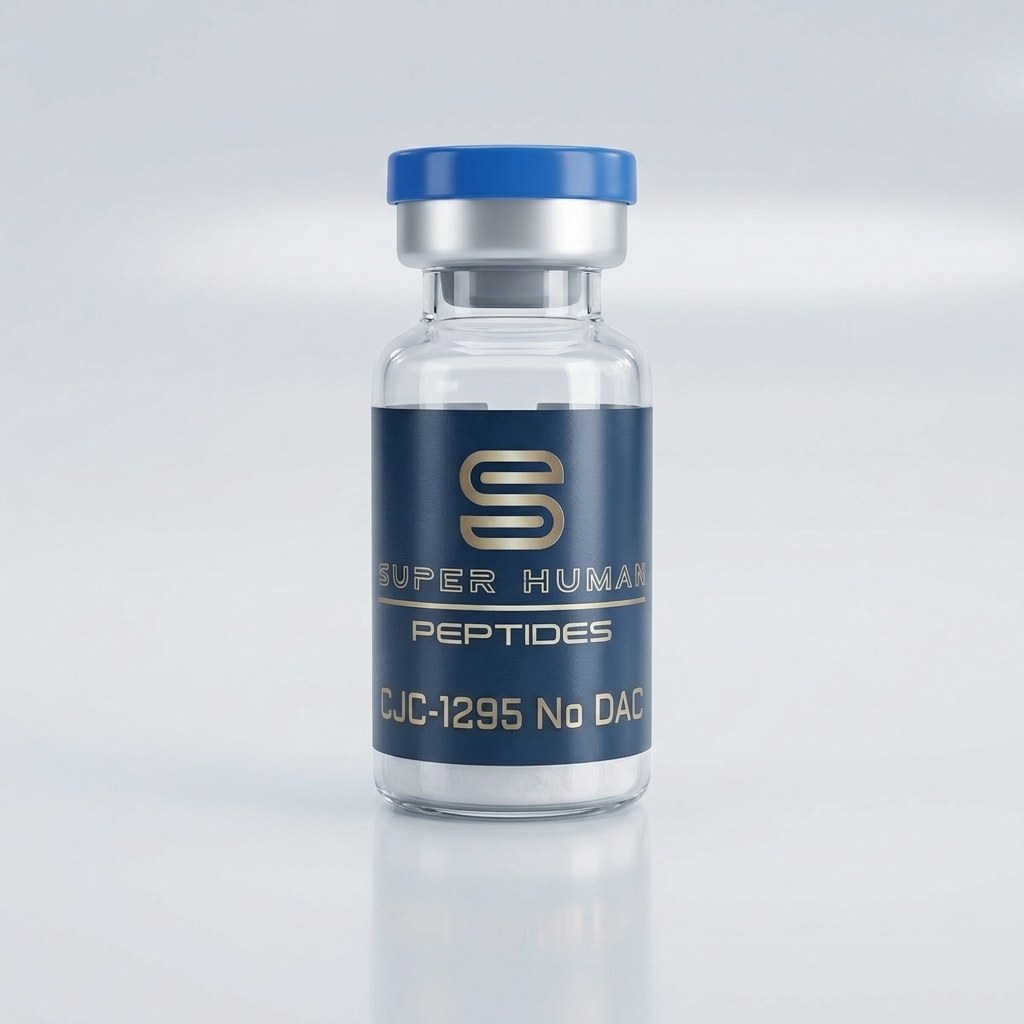
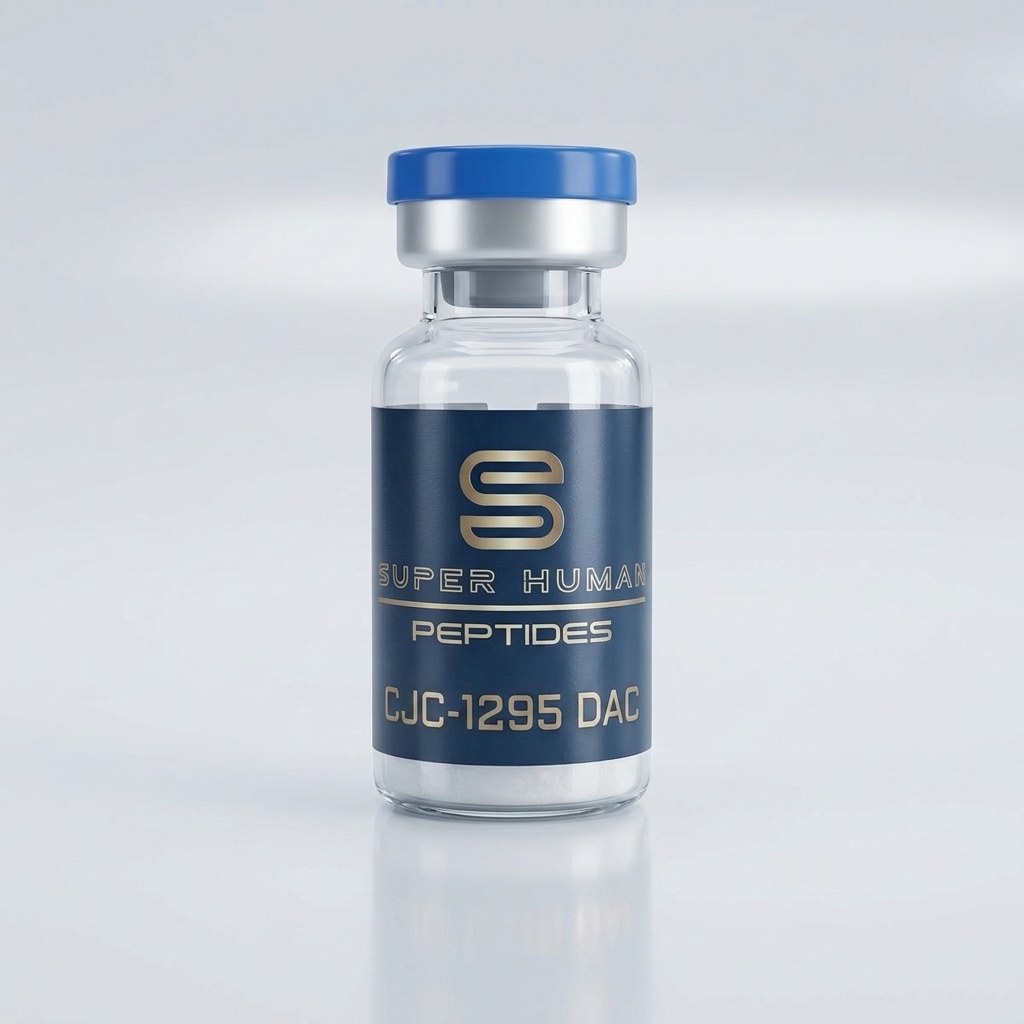
Ipamorelin + CJC-1295 No DAC
The CJC-1295 (without DAC) and Ipamorelin blend from Super Human Peptides UK is a highly advanced, synergistic dual-peptide formulation. It combines equal parts of a Growth Hormone-Releasing Hormone (GHRH) analogue and a Growth Hormone-Releasing Peptide (GHRP). In laboratory research, this combination is revered as the ultimate "synergistic pulse" model.
Researchers utilize this blend because the two peptides operate on entirely separate pathways to amplify each other's effects. CJC-1295 without DAC (frequently referred to in literature as Modified GRF 1-29) acts on the pituitary to stimulate the release of growth hormone (GH). Simultaneously, Ipamorelin binds to the ghrelin receptor to aggressively suppress somatostatin (the hormone that blocks GH release).
By stimulating the release while simultaneously removing the biological "brakes," the resulting GH pulse is exponentially larger than administering either peptide alone. Produced under GMP-compliant conditions and verified for 99% purity or higher, this blend is an elite tool for advanced preclinical research into anti-aging, profound cellular repair, and natural pulsatile GH modeling.
- —Synergistic Action: Combines a GHRH and a GHRP to create an exponential, synergistic pulse of growth hormone (often referred to in research as a "1+1=10" effect).
- —Natural Pulsatile Rhythm: Because CJC-1295 lacks the DAC modification, it maintains a short half-life (roughly 30 minutes), perfectly mimicking the body's natural, episodic GH spikes.
- —Somatostatin Inhibition: The Ipamorelin component aggressively blocks somatostatin, ensuring the GH pulse is not blunted by the body's negative feedback loop.
- —Highly Selective: Unlike older GHRPs (like GHRP-2 or GHRP-6), Ipamorelin is highly selective and does not cause massive spikes in cortisol, prolactin, or extreme hunger.
- —High Purity: 99% purity or higher (verified by HPLC and MS analysis) for both compounds.
- —Quality Standard: GMP / ISO certified manufacturing.
- —Synergistic Pituitary Activation: Studying the exponential increase in intracellular cAMP levels when both the GHRH receptor and the GH secretagogue receptor (GHSR) are activated simultaneously.
- —Pulsatile Pharmacokinetics: Measuring the rapid spike and subsequent natural baseline return of circulating IGF-1, contrasting the continuous "bleed" created by long-acting DAC analogues.
- —Selective GH Secretion: Investigating Ipamorelin's unique ability to force massive GH release without triggering the release of stress hormones (ACTH/cortisol) or prolactin.
- —Slow-Wave Sleep Architecture: Preclinical models exploring the blend's ability to deepen slow-wave (Delta) sleep, the primary biological window for tissue repair and memory consolidation.
- —Tissue Remodeling: Evaluating the accelerated synthesis of collagen, improved bone mineral density, and rapid recovery of lean muscle mass following induced systemic stress.
The strategy of combining a GHRH with a GHRP is one of the most well-documented phenomena in modern endocrinology. Researchers discovered early on that administering a GHRH alone often yielded disappointing results because the body would simply release somatostatin to block the spike. Laboratory studies utilizing the specific combination of Modified GRF 1-29 (CJC no DAC) and Ipamorelin have perfected this model.
Ipamorelin is widely documented as the safest and most selective of all GHRPs; in foundational animal studies, it stimulated a massive GH release comparable to GHRP-6, but without any of the lipogenic (fat-storing) or stress-hormone side effects. When administered together with CJC-1295 in vivo, researchers observed a massive, transient pulse of growth hormone that completely bypassed the somatostatin block, peaking rapidly and clearing the system naturally. Because it maximizes pituitary output while maintaining natural biological rhythms, it is the gold standard for long-term anti-aging and recovery modeling.
- 1.Raun, K. et al., "Ipamorelin, the first selective growth hormone secretagogue," European Journal of Endocrinology, 1998. (Foundational Ipamorelin selectivity).
- 2.Alba-Roth, J. et al., "Arginine stimulates growth hormone secretion by suppressing endogenous somatostatin secretion," The Journal of Clinical Endocrinology & Metabolism, 1988. (Contextual GHRH/Somatostatin dynamics).
- 3.Bowers, C.Y., "GH releasing peptides - structure and kinetics," Journal of Pediatric Endocrinology, 1993.
- 4.Johansen, P.B. et al., "Ipamorelin, a new growth-hormone-releasing peptide, induces longitudinal bone growth in rats," Growth Hormone & IGF Research, 1999.