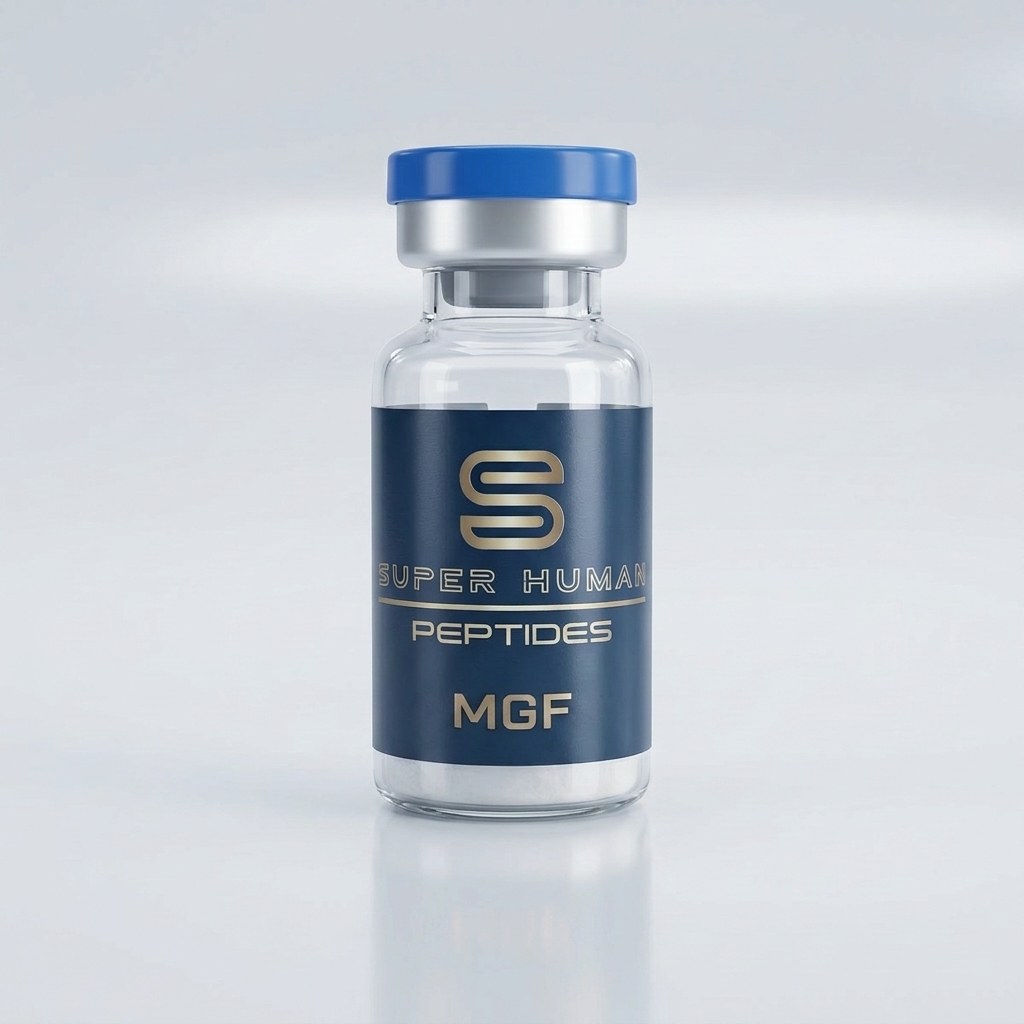
PEG-MGF from Super Human Peptides UK is an advanced, long-acting variant of Mechano Growth Factor (the IGF-1Ec isoform). In its natural state, MGF has an exceptionally short half-life (measured in minutes), limiting its use to highly localized, acute research models. To overcome this, PEG-MGF is engineered through a process called pegylation—the attachment of a polyethylene glycol (PEG) molecule to the peptide chain.
This PEG shield protects the peptide from rapid enzymatic breakdown and renal clearance, extending its half-life to several days. Produced under GMP-compliant conditions and verified for 99% purity or higher, PEG-MGF allows researchers to study the systemic, long-term activation of satellite cells (muscle stem cells) without the need for constant, localized administration.
- —Pegylated Structure: Addition of a polyethylene glycol (PEG) chain for superior metabolic stability.
- —Extended Half-Life: Pharmacokinetics extended from minutes to days for systemic research models.
- —Satellite Cell Activator: Triggers the proliferation of dormant muscle stem cells.
- —High Purity: 99% purity or higher (verified by HPLC and MS analysis).
- —Quality Standard: GMP / ISO certified manufacturing.
- —Documentation: Full Certificate of Analysis (COA) included with every batch.
- —Pharmacokinetics of Pegylation: Studying how the PEG shield prevents proteolytic cleavage and extends peptide bioavailability.
- —Systemic Muscle Hypertrophy: Preclinical models investigating whole-body satellite cell activation versus localized injections.
- —Delayed Differentiation: Researching the peptide's ability to maintain stem cells in a proliferative state for extended periods before they mature into muscle fibres.
- —Sarcopenia and Cachexia: Long-term intervention models for age-related or disease-induced muscle wasting.
- —Neuroprotection: Investigating the sustained neuroprotective effects of circulating MGF in models of ischemic brain injury.
The development of PEG-MGF represents a major leap in peptide engineering. While original research by Geoffrey Goldspink established the foundational importance of MGF in tissue repair, its rapid degradation made systemic therapeutic modelling difficult. Laboratory studies demonstrate that pegylation effectively masks the peptide from the body's immune system and digestive enzymes.
In animal models, systemic administration of PEG-MGF has been shown to successfully initiate the proliferation of myoblasts (muscle precursor cells) across multiple tissue sites simultaneously, leading to significant increases in total muscle mass over time. Because of its long-lasting circulation, it is highly favoured in research studying the reversal of severe muscular dystrophies and severe neurological trauma.
- 1.Goldspink, G., "Research on Mechano Growth Factor: its potential for optimising physical training as well as misuse in doping," British Journal of Sports Medicine, 2005.
- 2.Veronese, F.M., "Peptide and protein PEGylation: a review of problems and solutions," Biomaterials, 2001.
- 3.Barton-Davis, E.R. et al., "Viral mediated expression of insulin-like growth factor I blocks the aging-related loss of skeletal muscle function," Proceedings of the National Academy of Sciences, 1998. (Contextual IGF-1/MGF mechanisms).
- 4.Dluzniewska, J. et al., "A strong neuroprotective effect of the autonomous C-terminal peptide of IGF-1 Ec (MGF) in brain ischemia," The FASEB Journal, 2005.