Sermorelin Acetate
Sermorelin Acetate from Super Human Peptides UK is a synthetic, 29-amino acid peptide. It represents the shortest fully functional fragment of naturally occurring endogenous Growth Hormone-Releasing Hormone (GHRH 1-29). In laboratory research, Sermorelin is utilized to study the direct stimulation of the pituitary gland to secrete growth hormone.
Unlike synthetic growth hormone, which shuts down the body's natural production, researchers use Sermorelin to investigate natural, pulsatile GH release that remains subject to the body's endogenous negative feedback loop (regulated by somatostatin). Produced under GMP-compliant conditions and verified for 99% purity or higher, Sermorelin Acetate is a foundational model for neuroendocrine research, anti-aging studies, and the exploration of the somatotropic axis.
- —GHRH Analogue: The active 1-29 amino acid sequence of natural Growth Hormone-Releasing Hormone.
- —Natural Feedback Loop: Stimulates GH release without overriding the body's natural somatostatin regulation.
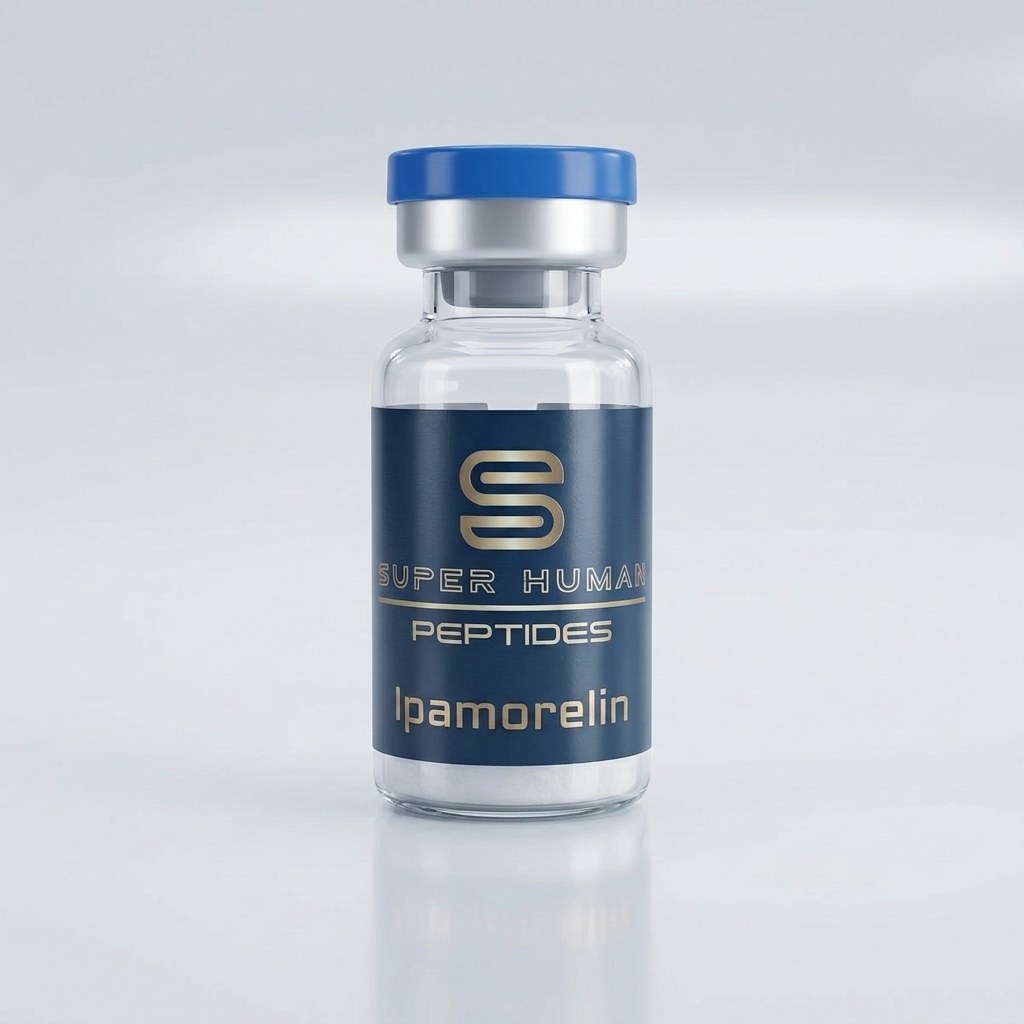
- —Synergistic Potential: Frequently studied in combination with GHRPs (like Ipamorelin or GHRP-6) to observe amplified somatotropic effects.
- —High Purity: 99% purity or higher (verified by HPLC and MS analysis).
- —Quality Standard: GMP / ISO certified manufacturing.
- —Pituitary Stimulation: Studying the binding affinity to GHRH receptors on pituitary somatotrophs.
- —Somatostatin Regulation: Researching how the body naturally limits excessive GH release via negative feedback mechanisms.
- —Synergistic Endocrine Models: Preclinical investigation of co-administering a GHRH (Sermorelin) with a GHRP (Ipamorelin) to measure exponentially increased hormone pulses.
- —Circadian Rhythm and Sleep: Investigating the peptide's influence on promoting slow-wave (deep) sleep in animal models.
- —Age-Related Endocrine Decline: Preclinical models exploring the restoration of youthful growth hormone levels in aged subjects.
Sermorelin was developed after researchers discovered that only the first 29 amino acids of the naturally occurring 44-amino acid GHRH molecule were required to stimulate the pituitary gland effectively. Laboratory and clinical literature from the 1980s and 1990s extensively documented Sermorelin's safety profile, noting that because it works upstream—prompting the body to produce its own hormone—it does not cause the severe side effects (like organomegaly or severe insulin resistance) associated with direct recombinant human growth hormone administration. Today, it remains a primary research tool for studying the reversal of age-related somatopause (the natural decline in growth hormone) and is heavily featured in protocols investigating bone density, skin thickness, and lean muscle retention in aging models.
- 1.Thorner, M.O. et al., "Extrahypothalamic growth-hormone-releasing factor (GRF) stimulates growth hormone secretion in normal subjects," The Journal of Clinical Endocrinology & Metabolism, 1983.
- 2.Vance, M.L. et al., "Growth hormone-releasing hormone: clinical studies and therapeutic aspects," Journal of the American Geriatrics Society, 1985.
- 3.Prakash, A. et al., "Sermorelin: a review of its use in the diagnosis and treatment of children with idiopathic growth hormone deficiency," BioDrugs, 1999.
- 4.Walker, R.F. et al., "Sermorelin: a review of its therapeutic use in the treatment of aging," Clinical Interventions in Aging, 2006.