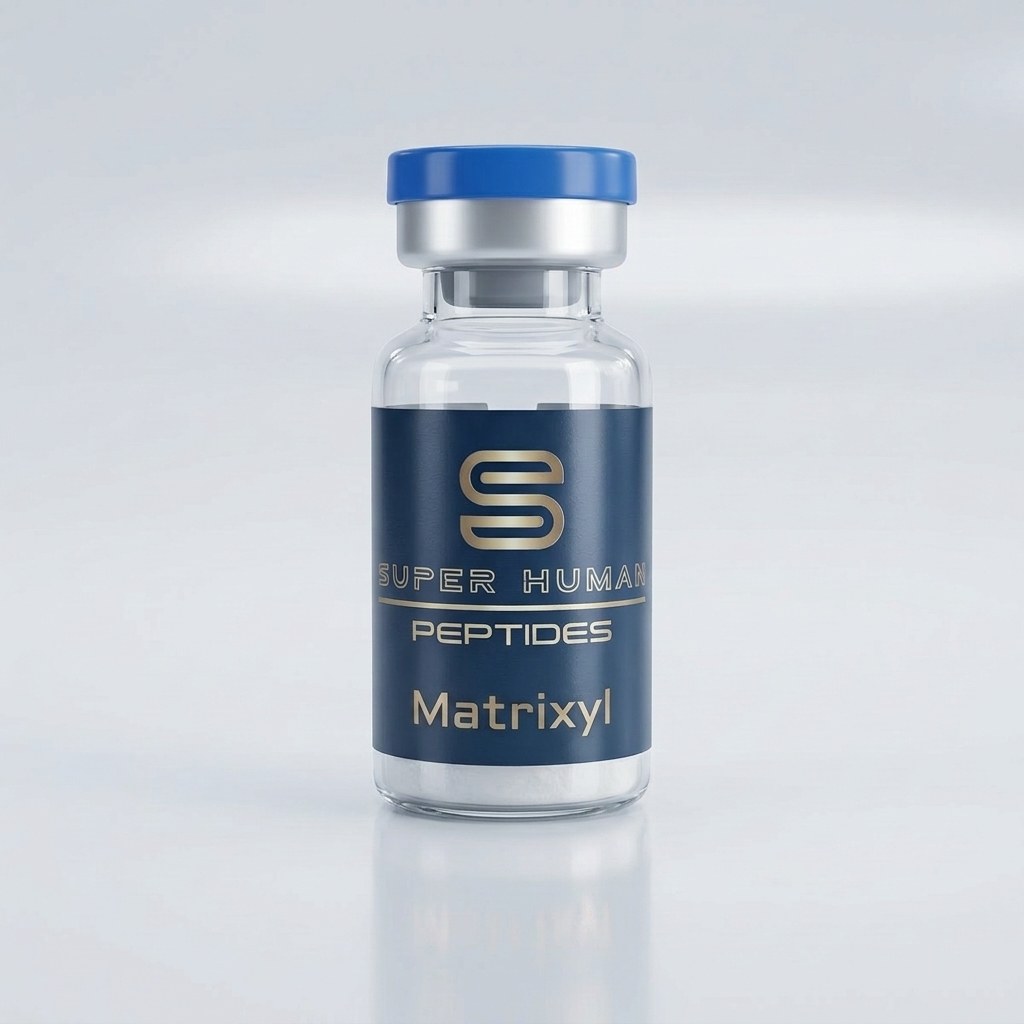
SNAP-8 (Acetyl Octapeptide-3) from Super Human Peptides UK is a synthetic octapeptide. It is an elongated, upgraded version of the well-known hexapeptide Argireline (Acetyl Hexapeptide-8), designed specifically for advanced dermatological and neuromuscular research. In laboratory research, SNAP-8 is studied as a topical, non-toxic alternative to Botulinum Toxin A (Botox).
Researchers utilize this peptide to investigate the destabilization of the SNARE complex—the protein machinery responsible for the release of acetylcholine at the neuromuscular junction. By mimicking the N-terminal end of the SNAP-25 protein, SNAP-8 competes for a position in the SNARE complex, preventing the release of neurotransmitters and effectively attenuating muscle contraction. Produced under GMP-compliant conditions and verified for 99% purity or higher, SNAP-8 is a foundational model for cosmetic chemistry and transdermal anti-aging studies.
- —SNARE Complex Inhibitor: Competitively blocks the assembly of the proteins required for neurotransmitter release.
- —Octapeptide Elongation: An 8-amino acid sequence designed to be approximately 30% more active than its predecessor, Argireline.
- —Non-Toxic Mechanism: Temporarily inhibits muscle contraction without destroying the SNARE proteins (unlike Botulinum Toxin).
- —High Purity: 99% purity or higher (verified by HPLC and MS analysis).
- —Quality Standard: GMP / ISO certified manufacturing.
- —Neuromuscular Blockade: Studying the dose-dependent reduction of acetylcholine release at the presynaptic membrane.
- —SNARE Complex Kinetics: Researching the competition between SNAP-8 and the endogenous SNAP-25 protein to prevent stable vesicle docking.
- —Cosmetic Delivery Systems: Preclinical models investigating liposomal and transdermal delivery mechanisms to improve skin penetration.
- —Dermal Extracellular Matrix (ECM): Measuring the secondary effects of reduced facial muscle tension on the preservation of collagen and elastin fibers.
- —Comparative Potency: Evaluating the elongation from 6 amino acids (Argireline) to 8 amino acids (SNAP-8) for increased binding affinity and duration of action.
The development of SNAP-8 followed the immense success of Argireline (Acetyl Hexapeptide-8). Researchers identified that by elongating the peptide sequence to an octapeptide, they could achieve a stronger, more stable competitive inhibition of the SNARE complex. Laboratory studies demonstrate that while Botulinum Toxin A permanently cleaves (destroys) the SNAP-25 protein (requiring the body to grow new nerve endings over several months), SNAP-8 merely disrupts the formation of the complex.
It mimics the N-terminal end of SNAP-25 and slips into its place. Because SNAP-8 is slightly different, the resulting SNARE complex is unstable, and the vesicle cannot release its acetylcholine. This results in temporary, reversible muscle relaxation.
In clinical and preclinical dermatological trials, topical application of SNAP-8 showed a reduction in wrinkle depth by approximately 34.98% over a 28-day period.
- 1.Blanes-Mira, C. et al., "A synthetic hexapeptide (Argireline) with antiwrinkle activity," International Journal of Cosmetic Science, 2002. (Foundational SNARE inhibition).
- 2.Gorouhi, F. et al., "Efficacy of topical peptides in aging skin," International Journal of Dermatology, 2009.
- 3.Ruiz, M.A. et al., "Cosmeceuticals for hyperpigmentation and other disorders of pigmentation," Clinics in Dermatology, 2009.
- 4.Schagen, S.K. et al., "Topical peptide treatments with effective anti-aging results," Cosmetics, 2017.