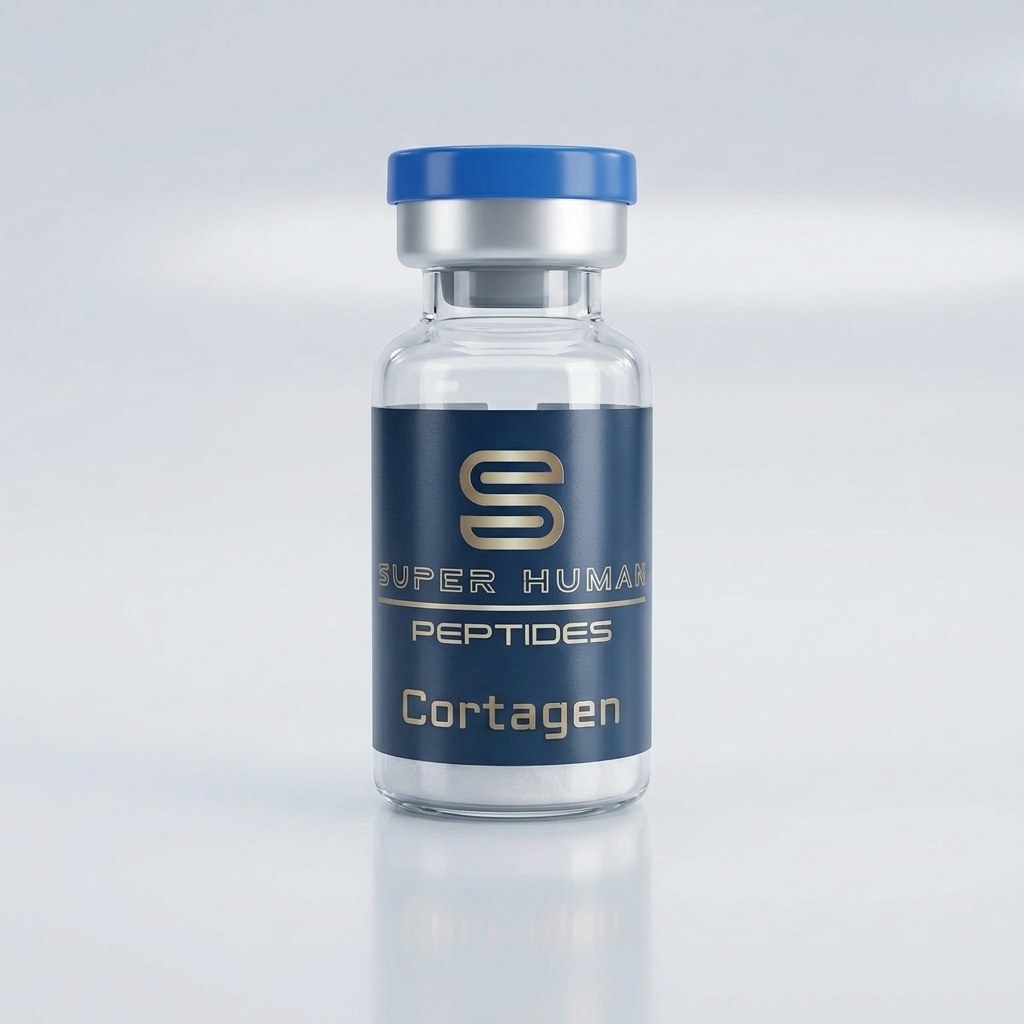
Pinealon from Super Human Peptides UK is a highly targeted, synthetic tripeptide (sequence: Glu-Asp-Arg). It belongs to the advanced class of short peptide bioregulators developed by the St. Petersburg Institute of Bioregulation and Gerontology.
In laboratory research, Pinealon serves as a premier model for investigating profound neuroprotection and the reversal of severe cellular oxidative stress. Researchers utilize this peptide because it acts as an epigenetic switch specifically for the central nervous system. By penetrating the nucleus of neurons and interacting directly with the DNA, Pinealon stimulates the endogenous production of antioxidant enzymes, drastically reducing the accumulation of reactive oxygen species (ROS).
Produced under GMP-compliant conditions and verified for 99% purity or higher, Pinealon is an essential tool for advanced in-vitro and in-vivo research into cognitive decline, hypoxic brain injury, and neurodegenerative disease modeling.
- —Cerebral Bioregulator: A short, 3-amino-acid peptide that acts as an epigenetic switch specifically for central nervous system tissue.
- —Endogenous Antioxidant: Stimulates neurons to produce their own defense mechanisms against reactive oxygen species (ROS) and free radical damage.
- —Hypoxic Protection: Highly studied for its ability to protect brain cells from severe oxygen deprivation and subsequent necrotic cell death.
- —Cognitive Preservation: Investigated for the reversal of age-related memory deficits and the restoration of learning acquisition in aged models.
- —High Purity: 99% purity or higher (verified by HPLC and MS analysis).
- —Quality Standard: GMP / ISO certified manufacturing.
- —Oxidative Stress Reduction: Measuring the peptide's ability to halt lipid peroxidation and prevent the structural degradation of neuronal cell membranes during toxic exposure.
- —Hypoxia and Ischemia Models: Preclinical models investigating the rapid salvage of cortical and hippocampal neurons following severe blood flow restriction.
- —Behavioral and Cognitive Restoration: Evaluating the acceleration of spatial memory consolidation and maze-learning in aged or chemically impaired animal models.
- —Excitotoxicity Prevention: Studying the intracellular signaling pathways that protect neurons from the lethal influx of calcium triggered by excess glutamate.
- —Epigenetic Gene Regulation: Investigating how the tripeptide un-silences dormant DNA regions responsible for cellular repair and ribosomal synthesis.
Pinealon was synthesized as part of Dr. Vladimir Khavinson’s pioneering research into the epigenetic origins of aging. His team discovered that as the brain ages, the natural production of short regulatory peptides declines, leading to the silencing of critical antioxidant genes and leaving neurons defenseless against metabolic stress.
Laboratory studies utilizing Pinealon demonstrate highly specific, tissue-directed neuroprotection. In cultured neuronal networks exposed to severe hypoxia or excitotoxins (like NMDA), the administration of Pinealon significantly reduced apoptotic (programmed) cell death and maintained the integrity of dendritic spines. Furthermore, in live animal models exhibiting age-related cognitive decline, Pinealon rapidly restored behavioral performance to levels comparable with young control subjects.
Because it treats the root epigenetic and oxidative machinery of the brain rather than acting as a temporary central nervous system stimulant, it remains a heavily prioritized compound in modern gerontology and neurobiology.
- 1.Khavinson, V.H. et al., "Peptide bioregulators: A new class of geroprotectors," Annals of the New York Academy of Sciences, 2002.
- 2.Mendzheritskii, A.M. et al., "Effect of Pinealon on the development of brain cortex cultures," Bulletin of Experimental Biology and Medicine, 2006.
- 3.Khavinson, V.H. et al., "Epigenetic regulation of gene expression by peptide bioregulators," Biogerontology, 2006.
- 4.Arushanian, E.B. et al., "Pinealon and Cortexin limit the development of oxidative stress in the rat brain under chronic psychoemotional stress," Eksperimental'naia i Klinicheskaia Farmakologiia, 2009.