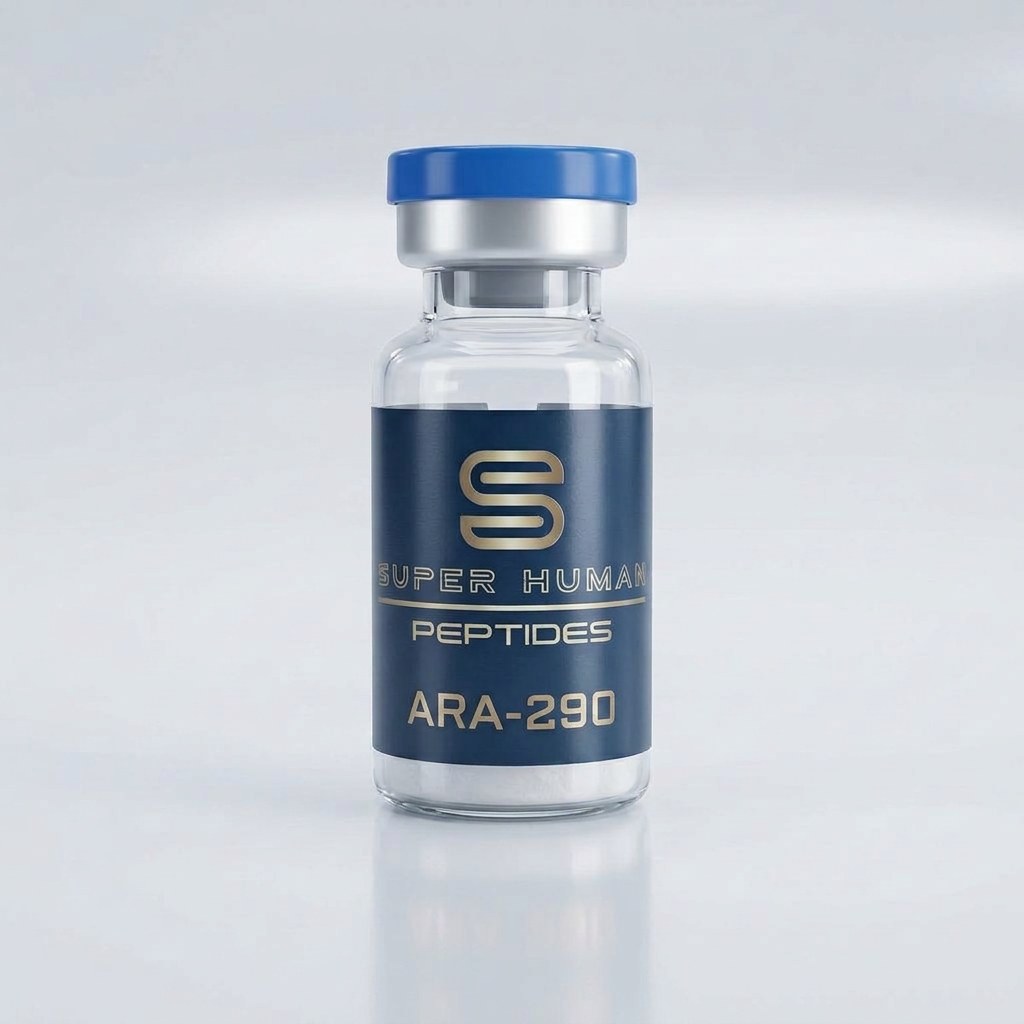
ARA-290 (also known in research literature as Cibinetide) from Super Human Peptides UK is a highly advanced, synthetic 11-amino acid peptide. It was specifically engineered as a non-erythropoietic derivative of the naturally occurring hormone Erythropoietin (EPO). In laboratory research, standard EPO is known to have powerful tissue-protective properties, but its use in tissue repair is severely limited because it stimulates massive red blood cell production (polycythemia), leading to dangerous cardiovascular thickening.
ARA-290 was designed to completely bypass this limitation. Researchers utilize this peptide because it selectively binds only to the Innate Repair Receptor (IRR)—a specific heterocomplex activated during tissue damage and inflammation—without binding to the receptors that trigger blood cell production. Produced under GMP-compliant conditions and verified for 99% purity or higher, ARA-290 is a premier model for investigating the reversal of severe neuropathic pain, small fiber neuropathy, and localized immune modulation.
- —Innate Repair Receptor (IRR) Agonist: Specifically targets the tissue-protection pathways activated during cellular stress.
- —Non-Erythropoietic: Uncouples tissue repair from blood cell production; does not increase hematocrit levels.
- —Neuroregenerative: Studied for its ability to stimulate the regrowth of small nerve fibers in damaged epidermis.
- —High Purity: 99% purity or higher (verified by HPLC and MS analysis).
- —Quality Standard: GMP / ISO certified manufacturing.
- —Small Fiber Neuropathy (SFN): Preclinical models investigating the reduction of allodynia (pain sensitivity) and the physical regrowth of nerve endings.
- —Macrophage Modulation: Studying the peptide's ability to deactivate pro-inflammatory macrophages and halt the secretion of cytokines like TNF-alpha.
- —Diabetic Neuropathy: Researching the restoration of sensory nerve function in models of severe, chemically induced metabolic damage.
- —Autoimmune Pathology: Evaluating the reduction of systemic inflammation and localized tissue damage in models simulating Sarcoidosis and Lupus.
- —Ischemic Tissue Rescue: Investigating the prevention of apoptosis (programmed cell death) in cardiac and renal tissue following oxygen deprivation.
ARA-290 was developed by Anthony Cerami and colleagues, who sought to isolate the profound, life-saving healing properties of EPO from its dangerous blood-thickening effects. By mapping the EPO molecule, they identified the specific 11-amino-acid sequence responsible strictly for interacting with the Innate Repair Receptor. Laboratory and advanced clinical modeling of ARA-290 has yielded groundbreaking results in the field of neurology.
In animal models suffering from severe diabetic or traumatic neuropathy, administration of ARA-290 not only halted nerve degradation but actually stimulated the physical regrowth of epidermal nerve fibers. Subjects demonstrated significant improvements in pain scores, thermal sensitivity, and localized inflammation without any measurable increase in red blood cell count. Because it provides a highly targeted "off-switch" for localized inflammation while promoting nerve repair, it remains a primary focus for chronic pain and autoimmune research.
- 1.Brines, M. et al., "ARA 290, a nonerythropoietic peptide engineered from erythropoietin, improves metabolic control and neuropathic pain in patients with type 2 diabetes," Molecular Medicine, 2014.
- 2.Dahan, A. et al., "Targeting the innate repair receptor to treat neuropathy," Pain, 2013.
- 3.Heij, L. et al., "Efficacy and safety of ARA 290 in sarcoidosis patients with symptoms of small nerve fiber loss," Molecular Medicine, 2012.
- 4.Swartjes, M. et al., "ARA 290, a peptide derived from the tertiary structure of erythropoietin, produces long-term relief of neuropathic pain: a promising new therapeutic option," Molecular Pain, 2011.